non-law careers for lawyers

Thinking About a Career Change? What Are the Best Non-Law Careers for Lawyers?

Summary: This blog explains how lawyers can confidently explore non-law careers for lawyers and other jobs for lawyers by using their existing skills in new ways. It highlights the importance of self-assessment, transferable skills, and careful planning while reassuring readers that career change is a step toward better balance, growth, and long-term satisfaction rather than starting over.

 Thinking about leaving law doesn’t mean starting over, it means using your strong skills in a smarter way. If you feel stuck, stressed, or simply ready for something new, you’re not alone. Exploring non-law careers for lawyers can open doors to roles that feel more balanced, creative, and rewarding, while still using your knowledge and experience.

What Should You Consider Before Making a Career Shift?

Before making a move, it helps to slow down and look at what truly matters to you.

  • Identify what you enjoy most about your current work
  • Notice what feels stressful or draining
  • Think about your strengths beyond legal tasks
  • Explore industries where your skills can transfer easily
  • Set clear goals for work-life balance and growth
  • Talk to professionals who have already switched careers
  • Be open to learning something new
  • Focus on roles that match your personality and interests

Taking these steps gives you clarity and confidence before making a big decision.

Why Are Lawyers Exploring New Career Paths?

The legal field can be demanding. Long hours, high pressure, and strict deadlines can take a toll over time. Because of this, more professionals are now exploring non-law careers for lawyers that offer flexibility and better balance.

A career shift is not about failure. It is about growth. When work aligns with your interests and lifestyle, daily life feels lighter and more meaningful.

Which Skills Make Lawyers Valuable in Other Fields?

Legal training builds strong, useful skills. These skills work well in many industries. Clear communication is one of the biggest strengths. Lawyers know how to explain ideas in a simple and structured way. Problem-solving is another key skill. Breaking down complex situations and finding solutions is valuable in any role.

Research, attention to detail, and negotiation also stand out. These abilities help in business, consulting, writing, and even leadership roles.

What Are Some Popular Career Options?

There are several paths that allow lawyers to step into new roles without starting from zero. Content writing and legal journalism are great options for those who enjoy writing. Business consulting is another path where analytical thinking is useful. Human resources roles also benefit from strong communication and policy understanding.

Compliance and risk management are natural fits as well. These roles still use legal knowledge but in a less stressful environment.

Can You Move Into Business or Start Your Own Venture?

Yes, and many lawyers do exactly that. A legal background helps in understanding contracts, risks, and decision-making. Starting a business or joining a startup can be exciting. It allows more control over time and direction. It also gives space for creativity and innovation. With the right planning, this move can feel both safe and rewarding.

How Do You Build Confidence During the Transition?

Change can feel uncertain, but small steps make it easier.

Start by learning about your chosen field. Take short courses or attend workshops. Connect with people already working in that space. Updating your resume to highlight transferable skills also helps. Focus on what you can do, not just your legal title. Confidence grows when you take action, even if the steps are small.

What Challenges Might You Face?

Every transition comes with a few challenges. You may feel unsure at the start. There may be a learning curve in a new role. At times, it might feel like stepping out of your comfort zone. That’s normal. Growth often happens in these moments. Staying patient and open-minded helps you move forward with less stress.

How Can Networking Help You Find the Right Path?

Connecting with others can open doors you may not expect. Talking to professionals who have already made the shift gives real insight. It also helps you understand daily work life in different roles. Networking builds support and creates opportunities that are not always visible online.

What Makes a Career Feel Fulfilling?

A good career is not just about income or status. It is about how you feel at the end of the day. Work that matches your interests, gives you time for life, and allows growth feels more satisfying. This is why exploring other jobs for lawyers can lead to a happier and more balanced life. Finding meaning in what you do makes a big difference.

How Long Does It Take to Transition Successfully?

The timeline can vary. Some people shift quickly, while others take time to explore options. There is no fixed path. What matters is moving at a pace that feels comfortable. Planning and preparation make the process smoother. A steady approach often leads to better long-term results.

Where Can You Get Professional Guidance?

Guidance from experts can make the process easier. Career coaches understand how to match your skills with the right opportunities. A trusted name like Career Strategies Group offers support to professionals looking for new directions. With the right guidance, the transition feels more structured and less overwhelming.

Final Thoughts

A career change is not about leaving something behind. It is about moving toward something better. With the right mindset and clear steps, exploring non-law careers for lawyers can lead to a path that feels more balanced, meaningful, and fulfilling.

Ready to explore a new path with confidence? Start your journey today and discover a career that truly fits your life.

FAQs

  1. What are the best non-law careers for lawyers?
    Popular options include consulting, compliance, writing, human resources, and business roles. These fields use your legal skills in a simpler and more flexible way.
  2. Do I need to study again to switch careers?
    Not always. Short courses or certifications can help, but your existing skills already give you a strong base.
  3. Is it risky to leave a legal career?
    Every change has some risk. However, careful planning and small steps can make the transition safer and smoother.
  4. How do I know which career is right for me?
    Start by understanding your interests, strengths, and lifestyle goals. Talking to professionals in different fields can also help you decide.
  5. Can I return to law later if needed?
    Yes, returning is possible in some cases. Keeping your knowledge updated can help if you ever choose to go back.
career coaching for lawyers

How Can Career Coaching for Lawyers Help You Find Clarity in Your Next Career Step?

Summary:  Career coaching for lawyers helps professionals overcome confusion and gain clarity about their next career step. By focusing on strengths, values, and goals, coaching provides structured guidance to explore new opportunities, improve confidence, and make informed decisions. With the right support, lawyers can create a clear, practical path toward a more fulfilling and balanced career.

Feeling unsure about your next move in the legal field can be stressful. You may wonder if you should stay, switch roles, or try something new. Career coaching for lawyers offers clear guidance, helping you understand your strengths, explore options, and move forward with confidence. With the right support, your path becomes easier to see and follow.

Why Do Lawyers Feel Stuck in Their Careers?

It is common to feel confused or unsure after spending years in a demanding profession. Long hours, high pressure, and limited growth can make anyone question their direction.

Sometimes, your interests change. Other times, work-life balance becomes more important. Without guidance, making a decision feels overwhelming. That is where coaching makes a real difference.

What Is Career Coaching and How Does It Work?

Career coaching is a guided process that helps you understand your goals and plan your next steps. It is not about quick advice. It is about building clarity step by step. A coach listens, asks the right questions, and helps you see options you may not have noticed before. This process feels supportive and practical at the same time.

How Does Career Coaching for Lawyers Bring Clarity?

Clarity does not come overnight. It grows when you start understanding yourself better. Career coaching for lawyers focuses on your skills, values, and interests.

Instead of guessing, you make decisions based on real insight. This reduces confusion and builds confidence in your choices.

What Key Areas Does Coaching Focus On?

A strong coaching process looks at different parts of your career and life.

  • Your strengths and skills
    Understand what you do best and where you shine.
  • Your interests
    Identify what kind of work makes you feel satisfied.
  • Your values
    Know what truly matters to you in a job.
  • Your goals
    Set clear and realistic career targets.
  • Your challenges
    Work through fears, doubts, or confusion.

Can Coaching Help You Change Careers?

Yes, it can. Not every lawyer wants to stay in traditional roles. Some look for non-legal careers or flexible work options.

Coaching helps you explore new paths without feeling lost. It shows how your skills can fit into different industries. This makes career change feel less risky and more planned.

What Makes a Good Career Plan?

A good plan is simple, clear, and practical. It should guide your next steps without confusion.

  • Clear short-term goals
    Focus on what to do next, not everything at once.
  • Step-by-step actions
    Break big goals into small tasks.
  • Realistic timelines
    Give yourself enough time to grow and adjust.
  • Support system
    Stay connected with mentors or coaches.

How Does Coaching Improve Job Search?

Finding a new job can feel tiring. A coach helps you stay focused and organized. With support from job search coaches for lawyers, you can improve your resume, prepare for interviews, and build confidence. This makes the process smoother and less stressful.

Why Is Confidence Important in Career Decisions?

Confidence helps you take action. Without it, even good opportunities can feel scary. Coaching builds confidence by giving you clarity. When you know your strengths and goals, decisions become easier. You stop doubting and start moving forward.

How Can the Right Guidance Make a Difference?

Guidance helps you avoid common mistakes. It saves time and reduces stress. At the right moment, expert support can change your direction completely. For example, working with Career Strategies Group can provide structured guidance and practical steps to help you move ahead with clarity.

What Signs Show You May Need Career Coaching?

Sometimes, you may not realize you need help. Here are a few signs:

  • Feeling stuck in your current role
  • Losing interest in legal work
  • Wanting better work-life balance
  • Feeling unsure about future goals
  • Struggling to make decisions

Recognizing these signs early can help you take the right step sooner.

How Long Does It Take to See Results?

Results depend on your goals and effort. Some people feel clearer after a few sessions. Others may take longer. The key is consistency. Small steps over time bring real change. Coaching is a process, not a quick fix.

Conclusion

Finding clarity in your legal career does not have to feel confusing or stressful. With the right support, you can understand your strengths, explore new paths, and move forward with confidence. Career coaching for lawyers offers a simple and guided way to take control of your future. When you have clarity, every step feels more certain and meaningful.

FAQs

  1. What does a career coach for lawyers do?
    A career coach helps you understand your goals, improve your skills, and plan your next career steps.
  2. Can coaching help me leave the legal field?
    Yes, coaching can guide you toward new career paths based on your skills and interests.
  3. How do I know if I need career coaching?
    If you feel stuck, confused, or unhappy in your career, coaching can help bring clarity.
  4. Is career coaching only for experienced lawyers?
    No, it is useful for both new and experienced lawyers at any stage of their career.
  5. How do I choose the right career coach?
    Look for someone with experience, good communication skills, and an approach that feels comfortable and supportive.

The Classified Waste Land – One Against the World

Responding to classifieds is almost a waste of time — but this past week, I was reminded about how much of a waste it really is.

A potential client sent me links to several jobs to which she planned to apply. They were all from LinkedIn. I said I’d take a look at them for her. I haven’t checked specific job listings on LinkedIn for a while, and I was flabbergasted by what I found.

I should have known better than to be surprised, so let’s just say I was reminded of what I – and any other qualified career coach – have known for years: Classifieds draw hundreds of responses, sometimes more than a thousand for a single position.

One LinkedIn classified for a GC spot at a consulting company has drawn 677 responses so far. A Deputy GC ad for a financial services company has drawn 202 resumes in just 5 days – that’s more than 40 incoming resumes per day, day in and day out! A LinkedIn posting for a GC at a lifestyle company has drawn 706 responses in 30 days, with more coming in.


How in the name of Mary are you supposed to compete

against 677 or 706 other lawyers?

Your chance of getting an interview are less than 1%.


The companies can wade through that pile of resumes and find two or three candidates who exactly match their specs. They can want to hire someone left- handed with blue eyes and find a perfect match.


Making it worse, some of these jobs allow for remote work – at the higher-level in-house positions, this is not unusual. This means the company can choose from applicants anywhere around the world if they have the proper US admissions.


So if you are looking for an in-house counsel role, you are not just competing against lawyers from your local area, you are competing against lawyers from all around the country, and even all around the globe. American companies can hire full-time senior in-house counsel to work remotely from India for $30 to $50 an hour, or around a high of $100,000 per year.


Classifieds are the easiest way to find job opportunities and apply to them. It takes minimal effort, very little time, and creates the delusion that you are actively seeking a job. Because that’s what it is – a delusion.


Recruiters are another easy way of finding jobs – all you have to do is send in your resume and let them find a job for you, right? Wrong. Recruiters are paid by the hiring companies to find attorneys with specific practice areas skills, years of experience and depth of knowledge in a hiring companies’ industry. For this they get paid 20-30% or so of the candidate’s first year compensation package, so for a position with a $350,000 package, the recruiter’s fee will be around $80,000 to $105,000 or more.


Recruiters are not paid that kind of money to find lawyers who have never done the specific work the employer needs, or who don’t know the employer’s industry. Recruiters put square pegs in square holes, and are all but useless to lawyers seeking a bend in their career paths.

I have talked with many attorneys who were seeking new careers, but who gave up because they never received responses from classified ads and got nothing but negative feedback from recruiters. Classifieds and recruiters are not likely to help lawyers seeking alternative careers. But there is a way out. In a free call, I will be glad to discuss better ways that are easy, but that also work.

__________________________________

Bruce Blackwell has been named at the top of the 2026 list of “The 10 Best Career Coaches in New York City” by Digital Reference, and has been called a “Dean of Career Counselors for Lawyers” by the New York State Bar Association.


If you are an attorney or executive and have been thinking about “what else is out there?” get in touch with him for a virtual cup of coffee. In a confidential, no-cost call, you can discuss your situation and get expert career advice. To schedule a call, click here: https://live.vcita.com/site/bruce.blackwell


If you like this article, please click on “Like,” add a Comment, or share it with a colleague. Thank you!

The First 90 Days on the New Job: A Strategic Blueprint for Success (and for Avoiding Failure)

You have all seen them. You might have been one yourself – A new employee who is talented, experienced and intelligent, but who crashes and burns within the first few months on the job.

One of the best investments I made at Career Strategies was in a Harvard Business School program about Experienced Executives Moving into New Companies and Why they Fail. I often counsel my new “graduates” – clients who have landed new positions – so that they can avoid these common and career-damaging pitfalls. Now I am sharing them with you.

First of all, in today’s high-stakes world of executive leadership and legal counsel, the “honeymoon phase” is a myth. For a General Counsel, C-suite executive or other senior-level professional, the first 90 days are not a grace period—they are a high-velocity diagnostic window. Your goal isn’t just to fit in; it’s to establish a mandate for your leadership.

Here is how to navigate the three critical phases of your transition.

Phase 1: Days 1–30 | The Diagnostic Deep Dive

Your first month is about radical listening.

Internal Stakeholder Audits: For new in-house senior attorneys and executives, this means meeting not just the C-suite team, but also the department heads and the administrative assistants who keep the business running. It’s about understanding the “unwritten rules” of the corporate culture. I have someone who is starting an important job at a global consulting company. One of that organization’s little peccadillos is that there is no swearing, Ever. Even a “damn” will put you on the way toward the exit ramp. Learn these cultural cues. In your initial forays, ask questions like, “If there is one thing you think we can do better, what would it be?” Another is, “What is the one thing we do here that makes no sense?”  At this juncture, don’t make any comments or suggestions – just say you will look into that. Make notes about things you may want to change, but for Pete’s Sake, don’t actually change them yet!
Inventory Risk and Assets: Conduct a SWOT analysis of your immediate domain. If you are a new CFO, look at the debt covenants and aging reports; if you are a Chief Legal Officer, audit the pending litigation and compliance workflows. If there are IP assets, review how they are tracked.
Define “Success” Upward: Schedule a formal alignment meeting with your CEO or the Management Committee. Ensure that your definition of a “win” matches theirs. Areas you discussed during the interview phase may not hold now that you are onboard. Get their input on top concerns and discuss your 30-60-90-day plan of action, specifying priorities, goals and milestones.

Phase 2: Days 31–60 | Building the Coalition

By month two, the “new person” smell has faded. Now, you must pivot from observing to connecting.

·         You should be meeting with your boss weekly, or at minimum bi-weekly, to make sure you are on track. Have a formal review of your 30-60-90 plan at the end of each month.

Identify the Influencers: In every organization, power doesn’t always follow the org chart. Identify the “institutional hubs”—the people others go to for advice. Securing their buy-in is essential for any future reforms.
The “Quick Win” Strategy: Identify a low-hanging fruit—a redundant process, a neglected vendor contract, or an outdated filing system—and fix it. For an attorney, this might be streamlining the NDA process. For an executive, it could be clarifying a muddled reporting line. These wins build the political capital you’ll need for larger transformations. If possible, make sure this quick win will resonate with the boss.
Assess the Talent: Evaluate your direct reports. Are they in the right seats? Do they have the resources they need? You cannot execute a long-term vision with a team that isn’t aligned with your standards.
At this juncture you are still doing your due diligence. Make sure your superiors – not just your immediate bosses, but other members of the management team — know what you are doing and when you will be prepared to take action; if you don’t do this early in your tenure, they may think you are doing nothing.


Be careful, though, not to give too much information about your plans to those who are not in your chain of command. It is too soon to know who you can trust, who is jealous because they didn’t get your job, and who is resistant to change and may sabotage your efforts. Corporate America is not always a nice place.

Phase 3: Days 61–90 | Defining the Strategic Mandate

The final month of your first quarter is where you move from tactical fixes to strategic architecture.

Present the 90-Day Report: Don’t wait for a formal review. Proactively present your findings to leadership. Detail what you’ve learned, the risks you’ve identified, and your proposed roadmap for the next six months.
Culture Over Structure: Executives often fail because they try to change the “what” before understanding the “why.” THIS IS A HUGE POINT! Executives who fail, according to my Harvard course, are often those who start making changes before they understand the true nature of the problems. Use this period to reinforce the values you want your department to embody.
Set the Boundaries: As a leader, your time is your most valuable asset. Use the end of your first 90 days to reset your calendar. Stop attending “courtesy” meetings and start carving out time for deep work and strategic planning.

The Professional’s Trap

The most common mistake for high performers is the “Action Bias.” You feel the pressure to prove your worth immediately, leading to premature decisions. Remember: your value in the first 90 days isn’t your ability to give answers; it’s your ability to ask the right questions. After that, it will be your ability to resolve obstacles to success and produce results that benefit your organization.


By the end of your first quarter, you should have moved from a state of “onboarding” to a state of “ownership.” You are no longer the new hire; you are the architect of the future … for your company, and yourself.

Bruce Blackwell has been named at the top of the 2026 list of “The 10 Best Career Coaches in New York City” by Digital Reference, and has been called a “Dean of Career Counselors for Lawyers” by the New York State Bar Association.

If you are an attorney or executive and have been thinking about “what else is out there?” get in touch with him for a virtual cup of coffee. In a confidential, no-cost call, you can discuss your situation and get expert career advice. To schedule a call, click here: https://live.vcita.com/site/bruce.blackwell

If you like this article, please click on “Like,” add a Comment, or share it with a colleague. Thank you!


The Need for Innovation and a Personal Brand Strategy (And free “Lunch and Learn” program on building your Competitive Edge)

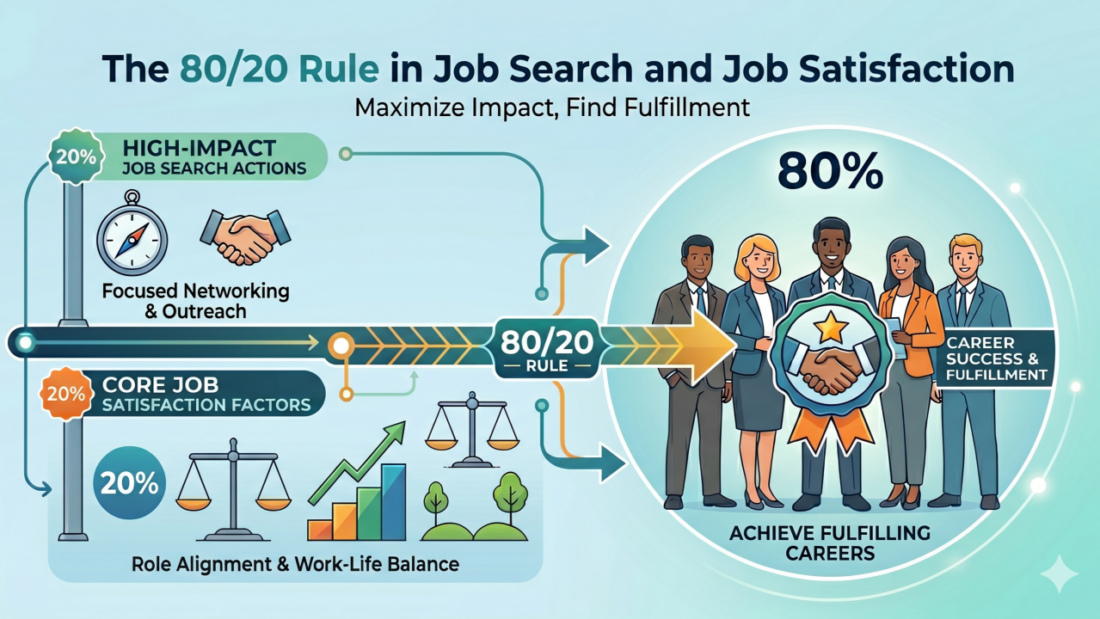
In today’s competitive job market, especially for higher-level positions, relying on classified ads, LinkedIn or recruiters is a strategy that will prolong a job search and that may ultimately fail. Most people don’t realize that these traditional methods account for only about 20% of job opportunities, leaving 80% of the market untouched by many job seekers. The best jobs are seldom advertised, and recruiters put square pegs in square holes.

To secure a coveted senior-level role, it is imperative to employ creative strategies that go beyond the conventional. This is the focus of my work at Career Strategies Group – getting clients smart on innovative approaches to the job search and re-careering process.

The first step toward success is to do research. Understanding the specific needs and challenges of your targeted industries or companies is crucial. This knowledge allows you to tailor your approach and demonstrate how your unique skills and experiences can provide solutions. For instance, if a company is expanding into new markets, showcasing your expertise in international business development can make you an attractive candidate.

Keeping track of industry trends and emerging technologies can position you as a forward-thinking leader, ready to drive innovation and growth. The latest surveys of employers show that while expertise in your specialty or practice area matters, what is really important is evidence of innovative thinking, comfort with technology, and the ability to contribute to corporate growth in ways outside of your practice area. I have talked with literally more than 20,000 lawyers, and 19,640 described themselves as “creative problem-solvers.” Your resume needs to prove that and not just talk about your duties are responsibilities!

Networking remains a powerful tool in the job search arsenal, but it requires a different approach than what I call “old- fashioned” networking — calling on people you know in hopes they know of job openings for you. Old-fashioned networking still has its place, but as Al Dold, one of my great career counselors at Career Strategies, so often said: “It’s not who you know, it’s who you get to know.”

Establishing genuine connections with industry influencers is a form of networking that can set you apart. Engaging with thought leaders on social media platforms, participating in relevant online forums, and contributing to industry publications are excellent ways to build a robust professional presence. These activities not only increase your visibility but also demonstrate your commitment and expertise in your field.

Another innovative approach is to create a targeted value proposition for each potential employer. I call it your Personal Brand Strategy. I have helped thousands of clients develop one so that they can differentiate themselves from other candidates with similar experience.


We are planning a free Zoom “lunch and learn” on how to create a Persona Brand Strategy and gain a Competitive Edge over other candidates. If you are interested in attending, send an email to info@careerstrategiesgroup.com or message me on LinkedIn and I will send you information as the program is developed.


An approach that I often work successfully with my clients is not relying on a resume-based campaign. Instead of a generic resume and cover letter, I recommend developing a customized pitch that outlines how they can address the company’s specific needs. We call this our “create-a-job” strategy. This might include a strategic plan or a portfolio of past successes that align with the company’s goals. Such tailored applications show a deep understanding of the company’s challenges and your readiness to tackle them head-on. This approach has produced some incredible results and is a hallmark of our work!

Leveraging digital tools and platforms can – and must – be used today, since they significantly enhance your job search efforts. Building a strong LinkedIn profile, maintaining a professional blog, or creating a personal website can showcase your expertise and attract the attention of hiring managers. Many of my clients are senior-level and in mid-life or beyond; they are very smart people, but often not when it comes to social media. This is one of the ways we help them. You may be an old dog like me, but you will need to learn some new tricks!

The bottom line is the securing a high-level job today demands more than traditional methods. It requires a blend of innovative thinking, thorough research, and creative engagement strategies.

By going beyond the conventional and tapping into the hidden job market, you can significantly decrease your job search time and significantly increase your likelihood of landing a role that aligns with your career aspirations.

+++++++++++++++++

Bruce Blackwell has been called a Dean of Career Counselors by the New York State Bar Association. His specialties are Job Search Coaching and Alternative Careers for Lawyers and Executives.

If you are an attorney or senior executive and you have been thinking about “what else is out there?” get in touch with him for a virtual cup of coffee. In a confidential, no-cost call, you can discuss your situation and get expert career advice. To schedule a call with Mr. Blackwell, click here: https://live.vcita.com/site/bruce.blackwell

If you enjoy our Beyond the Bar newsletter, please click “like” and provide a “comment.” If you have any questions about your career, click here

Young Professional Job Market

My practice has traditionally focused on the career of middle-aged and older professionals, but the fastest growing segment of my business is from younger professionals, age 25-34. This segment faces daunting challenges, unlike any that we’ve experienced before.

In this column, I will provide a Young Professional market overview, then give some specific action steps that those in their early careers can take. By the way, this advice also holds for mid- and late- career professionals, so pay attention, Boomers and GenX’s!

What the Market Wants. 

The 2026 job market for young professionals has been characterized by some as “low hire, low fire.” Economists report that employers are making fewer “growth” hires and focusing instead on mission-critical roles. This is quite different from the more senior market, where mental agility, leadership, and an understanding of business strategies are important, whether you are the company lawyer, operations executive or accountant.

For those who are now saddled with college loan debt, I hate to report that employers are lessening their requirements for college degrees; instead, their focus is on specific skills. Even non-tekkies need to have computer skills, most especially with AI. I think that corporate America is being short-sighted here (so, new?) because for a business to be successful, it needs to have managers who know how to think critically and not just know SQL. But I digress.

What You Need to Do.

1) Do a Skill Set Audit of Your Resume. Where you worked is less important than listing your skills and how you used them to produce results.  Be specific. Give numbers when you can. Instead of saying, “Managed a project that was completed ahead of schedule and under budget,” say “Using automated workflow tools, led a cross-functional team of five engineers, researchers and marketers on a new consumer product evaluation that resulted in a 17% increase in throughput.” (It’s even better to lead with the results, as we discuss in section 3 of this article). It is also important in your resume to show your soft skills, like the ability to communicate across various departments, your skills in working with a team, and your EQ, or emotional intelligence. Lastly, there are tools like Jobscan and Teal that you should use to match your resume against specific job listings.

2) The new Speed Dating: Micro Networking. As a job search coach, I have long been a believer that “it’s not who you know, it’s who you get to know” that is a key to success. LinkedIn has made this much easier than in the past. Low volume coffee talks are being replaced by high volume digital interactions. But when reaching out to someone on LinkedIn, make your request for a 10–15-minute chat, not a 30-45 minute one. Be sure to engage with your network target before you ask for a call; follow your targeted decision-makers and comment on their posts for a few weeks before even making a connection request. You are pre-selling this way! Finally, reach out to alumni from your university and/or grad school, especially those 2-3 years your senior. I have been giving this advice to my mid-career and older clients since people were buying DVDs, but without the 2-3 years senior provision.

3) Build a Digital Work Portfolio. Include 2 or 3 case studies as a 1-page addendum to your resume highlighting problems you solved, contributions you made, and so on. Provide details. Most career coaches suggest using PAR stories – Problem, Action, Result. I think they are wrong. I recommend RAP stories: Result, Action, Problem. Grab them with the Result first, since they may not get to the good part in your PAR story. Example: “Brought a new $200k client to the firm by applying my marketing and client service experience, thereby turning around a practice group that was losing money” is a much stronger statement than “When a practice group was losing money, used my marketing and client service experience to bring a new $200,000 client to the firm.” Don’t save the good stuff to the end.

4) Practice AI Interview Skills. I believe that if you land an interview, the job is yours to lose. In other words, they already know all about you from your resume and LinkedIn information, and they want to talk with you about joining their firm. If you present well, you win. If you don’t, you lose. Practice makes perfect. I have prepped clients for about 6,000 interviews. While the basics remain the same, prepping for a video interview with a person is different from an in-person interview. Preparing for an AI interview is even more different, because you can’t get visceral cues from an avatar. Preparing for an interview with a coach is extremely important, but you can (and should) practice AI interviews on your own with tools like Teal, Verve AI and Google Interview Warmup. In addition to all the other questions you need to prepare for, be sure to have an answer to “how do you use AI?”

These are challenging times for young professionals looking to build their careers. But there are opportunities if you know how to play the game in 2026. The rules have changed, but with a properly prepared and mounted campaign strategy, you can win.   ______________________________


Bruce Blackwell has been called a Dean of Career Counselors by the New York State Bar Association. His specialties are Job Search Coaching and Alternative Careers.

If you are an attorney, senior executive or young professional and you have been thinking about “what else is out there?” get in touch with Bruce for a virtual cup of coffee. In a confidential, no-cost call, you can discuss your situation and get expert career advice. To schedule a call with him, click here: https://live.vcita.com/site/bruce.blackwell


If you enjoy our Beyond the Bar newsletter, please click “like” and provide a “comment.” If you have any questions about your career, click here.

2026 Job Forecast for Senior Executives Opportunities, Challenges, and Strategic Shifts for Top Leadership Roles

The job forecast for senior executives in 2026 is similar but different from that of attorneys. Given the choice, I would rather be a lawyer than an executive in this job market. Why? Because the

landscape for senior executives is in a state of major transformation.

Driven by technology, evolving market demands, and shifts in organizational priorities, the job forecast for executives is promising yet complex. In this column we will explore trends shaping executive opportunities, sectors poised for growth, and the skills that will define successful job seekers this year.


Economic Outlook and Executive Demand 

Despite ongoing economic and political uncertainty, many industries are expecting financial growth in 2026. As with law, the demand for senior executives will be tied to sectors like technology, healthcare, green energy and financial services, each of which is experiencing disruption yet also expansion. Companies are seeking leaders who can navigate volatility, drive innovation, and manage change.

According to recent market analyses and executive search firm reports, the job market for senior leaders will remain competitive, with organizations increasingly willing to invest in top talent who can deliver measurable results. However, the bar is higher than ever: companies and recruiters are looking for executives with proven digital savvy, resilience, and a global mindset. The digital savvy — and tech smarts overall — have suddenly become important differentiators in the market, and are not things that I, as a career coach for executives and lawyers, had to worry about much in the past. Now I do! Even I am taking online courses in tech!


Key Growth Sectors for Executives 

  • Technology: Tech continues to be big in executive hiring, particularly roles focused on artificial intelligence, cybersecurity, and cloud infrastructure. While this certainly applies to CTOs, CIOs, and Chief Data Officers, it also applies to Marketing, Operations, Sales, Corporate Communications and Client Service – virtually every executive will need to know how to align tech strategies with business goals.
  • Healthcare and Life Sciences: We are not talking about doctors and nurses, we are talking about business leaders. The pandemic’s long tail has expanded the need in healthcare, biotech, and pharmaceuticals for executives with backgrounds in regulatory affairs, finance, M&A, and Human Resources, among others.
  • Green Energy: As mentioned in my last newsletter, the sustainability movement that was all the rage 20 years ago had all but died in the more recent past. The current administration is certainly not interested in sustainability, but the American public now very much wants it (except in the coal fields of West Virginia and Kentucky). Even though the environmental regulations are disappearing, companies are moving forward with sustainability initiatives. There is a surge in opportunities for Chief Sustainability Officers, heads of ESG and leaders in clean energy firms.
  • Financial Services: The financial sector is undergoing rapid change, especially in fintech, digital payments, and compliance. Executives with expertise in risk management, regulatory navigation, and digital product development will find strong prospects.  


The New Executive Profile 

The archetype of the American senior executive is evolving. Industry and job function expertise alone are not cutting it in 2026. The most sought-after candidates will be those who demonstrate adaptability, emotional intelligence, who can work cross-functionally, and who can build resilient cultures and foster innovation in their departments.


Additionally, the rise of remote and global teams requires leaders who are comfortable with virtual management, and who have the ability to communicate vision and strategy across teams scattered around the world. This is now a baseline expectation, not a differentiator.


Opportunities and Challenges in Executive Hiring 

The competition for senior executive roles will be intense. While demand is strong, so too is supply, with many seasoned leaders seeking new challenges. Executive recruiters tell me that compensation packages are becoming more creative, often including flexible work arrangements, equity stakes, and performance-based incentives.


However, challenges persist. Economic headwinds and geopolitical instability can impact hiring plans. Organizations are also increasingly scrutinizing leadership track records, especially regarding crisis management.


Skills and Credentials That Matter 

  • Digital Fluency: Executives must be conversant in digital strategy, data analytics, and emerging tech trends. You do not need to be a programmer, but you need to know what tech resources can do to help your business grow.
  • Strategic Agility: The ability to pivot quickly and respond to market shifts is essential.
  • Stakeholder Management: Building trust with boards and employees remains a core executive responsibility. Also, the skills needed to manage Boomers are far different from those necessary to manage Gen X’s and Millennials, and must be demonstrated.
  • Global Perspective: International experience and cross-cultural competence are increasingly valued. The ever-changing picture in supply chains and distribution channels necessitates an intelligent global perspective.
  • Commitment to ESG: Understanding the impact of environmental, social, and governance factors on business is critical for long-term success.


In sum:  

Success in the executive job market today will hinge on business acumen shown across diverse functions; strategic vision; people skills; and an understanding of technological tools. Those who embrace innovation and lead with resilience will be best positioned to thrive. For executives considering their next move, continuous learning and adaptability will be a key to success.

____________________________________________________________________________________

Bruce Blackwell has been called a Dean of Career Counselors for Lawyers by the New York State Bar Association. His specialties are Job Search Coaching and Alternative Careers for Lawyers and Executives.


If you are an attorney or senior executive and you have been thinking about “what else is out there?” get in touch with him for a virtual cup of coffee. In a confidential, no-cost call, you can discuss your situation and get expert career advice. To schedule a call with Mr. Blackwell, click here: https://live.vcita.com/site/bruce.blackwell

If you enjoy our Beyond the Bar newsletter, please click “like” and provide a “comment.” If you have any questions about your career, click here.

Our Last 2025 Success Story!

Every client that I signed up through November of this year for career coaching has landed a new position! One of my favorite aspects of being a career coach for lawyers is advising them on how to exit their law firms.

The question of how to resign from a law firm is one that some lawyers only face a few times in their careers, but is an issue I’ve dealt with … hmm, let’s see…. ah yes, several thousand times!

We have seen many different types of exit agreements, including one or two where the lawyer agreed to return to his old firm several months down the road to handle a federal case already on the docket, and on which he had several years of preparation. In other cases, lawyers seeking to resign from their firms have sometimes been told to leave immediately.

For rules of thumb, for very junior lawyers two weeks can be adequate. I don’t deal with very junior attorneys on job search, so I have no particular insight to share.  For more experienced attorneys, two to four weeks is common. As a career coach, I personally don’t like the “two week” option because it creates difficulties for the firm and for the clients. My general preference is to give three weeks notice. For partners, I tend to recommend one month, but sometimes up to three months, depending on how complex the cases and how many there are to transfer.

While there is no single perfect answer, in many situations I think 3-4 weeks notice is fine. I also suggest the following:

1) Make sure you have a solid, written offer from your new employer before giving notice!

2) Check your employment contract, as the notice provision may be covered therein

3) Before telling the firm, download any personal files from your office PC to a thumb drive. Don’t take any files that belong to the firm! If you have a transaction summary or information on business you brought in, improvements you made in the firm, and so on – things that could go into your resume — download those.

4) After you have given notice (but you can do it before, too), prepare a detailed transfer memo on all of your active cases, so the attorney(s) taking over those cases are prepared properly to do so. Be as detailed as necessary; consider what you would want to know if you were the lawyer taking over a case.

5) Prepare a statement about your pending billable hours, commissions due, and remaining vacation time and PTO.

6) Resign in person with your boss, then give them your formal letter of resignation. Don’t let others in the firm know until you have told your direct superior. Once that is done, you should talk to each person in the firm with whom you have worked.

7) Be positive in your conversations with your boss and your colleagues. Don’t be negative about the firm or your exit package. You want to leave on good terms – you never know when you will need a reference from a former boss or colleague.

In dealing with the new firm, they typically want someone to start right away. My counsel is to explain that you want to be fair to your old firm and you want to make sure your clients will not be adversely affected by your departure – this means giving the old firm adequate time to prepare your transfer memos and to give it time to start seeking a replacement. The new firm should understand and accept this thinking – it shows that you would never leave them in the lurch, either!

Quite often, my client will want to take a break between leaving the old job and starting the new one. Getting a little R&R can be very helpful and is advisable!

This is not to say that you can’t start familiarizing yourself with the new firm’s cases, start studying files at night and doing some work for them on weekends so you can hit the ground running.

The bottom line is to get your ducks in a row before you give notice, and be prepared for anything when it comes to their reaction. In my experience, there’s often nothing to worry about and the transition out seems to run smoothly most of the time.

This is our last newsletter for 2025. We wish all of our readers and friends a very merry holiday season and a happy, healthy, and fulfilling New Year. —  Bruce

Bruce Blackwell has been named the Dean of Career Counselors for Lawyers by the New York State Bar Association. His specialties are Job Search Coaching and Alternative Careers for Lawyers and Executives.

If you are an attorney or senior executive and you have been thinking about “what else is out there?” get in touch with him for a virtual cup of coffee. In a confidential, no-cost call, you can discuss your situation and get expert career advice. To schedule a call, click here: https://live.vcita.com/site/bruce.blackwell


If you enjoy our Beyond the Bar newsletter, please click “like” and provide a “comment.” If you have any questions about your career, click here.

Freedom to Fail: Courtship and Career Development

It’s not the things you do that you regret, it’s the things you don’t do.

While in college I decided I did not want to end up in my 70s regretting that I didn’t do certain things — so I made a list of what I wanted to do professionally, and went out and did them: Journalism, politics, TV, movies, big league consulting. Well … I did most of them.

I failed at a few attempts.

I was never offered a top programming job at a Big 3 TV network. I never became a successful scriptwriter. But I didn’t regard these as failures — I was in there pitching, giving it all I had. And I came close.

My meeting with the President of the TV network was cancelled because he was invited to meet with the Pope. The Pope! I finessed an invitation to write a script for a TV sitcom and was toiling away when the show was cancelled. Poof!

These careers didn’t work out, but I kept pursuing other jobs that I wanted, and am better off for it. Every position I have ever had — except for the one I wrote about in my last newsletter – has been challenging, rewarding, lucrative and enjoyable.

It is OK to take a risk, to try, and to fail. No one gets what they truly want by playing it safe.

It’s like dating. In fact, I have long maintained that career development is a courtship.

Consider this: there’s someone you want to know sitting three offices away from you. If you take the risk of asking her out and she says “yes,” you may change your life forever! If she says “no,” you took the risk and failed, and your life remains the same as it was. No harm, no foul.

The worst outcome, though, is if you don’t risk asking her out, nothing gets changed — but for the rest of your life you may regret not asking and grow old wondering “what if…”

It’s not failing that damages people’s lives, it is the fear of failing.

The parallels between courtship and job search are stunning. You are attracted to someone (a career). You plan your approach strategy so they notice you (your resume). You persuade them to go out for coffee or lunch (the initial interview). Next, if they are interested, you do a casual dinner and a movie (the second-round interview). If there’s still interest, it’s onto dinner at an expensive restaurant (interview round 3). Then it’s “meet the parents” time (final interview). At that point, it’s either you are a couple (hired) or you are past tense (not).

I am not advocating taking stupid risks, just calculated ones. For example, you do not have to risk your job to look for a new career that you love. An effective job campaign can be done without interfering with your current job. The majority of my clients have been employed professionals who were fully attentive to their jobs while attending to their job searches. While often skeptical at the start, they took the risk of going after something better, and most succeeded.

When it comes to careers, as in dating, there’s no harm in “going for it.” The worst that can happen is that you are no better off than you were before. The best that can happen is that your life can become so very much better!

We can live with failure. It is much harder to love with regret. Your choice.

(For a musical illustration of the parallels between dating and career regret, click here and cursor to about 1 minute in: https://www.youtube.com/watch?v=ogwDQEyj7aA

If you are an attorney or senior executive and you have been thinking about “what else is out there,” or if you are not sure how to start a career transition process, get in touch with me for a virtual cup of coffee. You will receive a confidential, no-cost consultation to discuss your situation and goals, and will also get expert advice on how to launch your job campaign. To schedule a strategy call with me, click here: https://live.vcita.com/site/bruce.blackwell

If you would like to receive Beyond the Bar Newsletter every 2 weeks, just click on the “subscribe” button. If you have any questions about your career, click here.

Science Proves Boomers Deliver Strong Thinking in Tough Jobs

If you follow the news about the job market, you’ve read that the market stinks for Boomers, those 61 and older. Bullsh*t.

There are plenty of good jobs out there for professionals in their 60s and 70s. The market is a bit complex, but winnable if you stress the right skills and contributory value.

Being a Boomer doesn’t mean you are a decrepit old geezer. All Boomers do not go around in walkers. In the summer, I play a senior softball league for men age 55+. The league is competitive. The players can still make the peg from deep short to 1st in the air and still hit home runs over the fence.

A 60-something player recently landed a Big Data analytics job in a med tech company. He is working with very complex analytics software, and was far from an expert in the program when he was hired. There were plenty of people more qualified than he, but he’s a very smart guy. The med tech company’s boss realized he could bring a great deal of value and perspective beyond just knowing the software. 

“Smart” is what counts. According to The Week magazine, university researchers in Australia analyzed decades of data to chart how intellect, judgment and personality evolve over a lifetime. They concluded that overall cognitive functioning reaches its high point between ages 55 and 60. The study found that middle-aged minds tend to be wiser, steadier and more capable overall than younger minds. “While some people may find this obvious,” says lead author Gilles Gignac, “it had never been quantified and established scientifically.”    

I specialize in mid-life (and older) career change for attorneys and professionals. They are able to make career and/or industry changes because of their overall capabilities, not their specific specialties. I have a 60-year-old current client whose entire career has been spent in healthcare middle-management roles. She is very close to landing a new position as the Chief Operating Officer for a company in an entirely different industry, one far removed from healthcare, with a $30,000 salary increase.

I would rather write about the experiences of others than about my own, but I am representative of what older professionals can do, so here’s another story. Since Career Strategies has been good to me, a few years ago I decided to cut back on my practice so I could enjoy the fruits of my labors. I have done that. I now take on a few clients each month, but had thought I’d spend a few days each week doing fun, part-time, $15 per hour jobs at a nearby resort renting out kayaks in summer and skis in the winter.

Instead, I ended up being hired as the part-time Executive Director of a  moribund County Bar Association. I’d never worked for a professional association or a non-profit, but I had the transferable business skills to do it. It was, I must admit, odd working for lawyers when until then, lawyers worked for me! Revitalizing that organization was a big challenge involving everything from technology to grant writing to event planning to helping callers in legal distress, all things in which I had very little to no experience.

I accomplished what I needed to accomplish there and was getting ready to start renting out kayaks at the beach. But that was not to be. I was hired to be the paid, part-time Executive Director of a regional consumer affairs agency for the state Attorney General. Once again I have lawyers working for me – the natural order of things! – but it is mostly a volunteer workforce, which has presented a new type of managerial challenge. It’s been great and I intend to stick with it for many more years.

As it turns out, as a senior citizen (albeit is a fairly young one) I have been hired for top-level positions in two organizations, both in areas in which I had no prior experience.

But that’s not the end of it!

I made new contacts in these positions, and was invited to sit on three different Boards of Directors, two of which involve some heavy responsibilities. Between the three Boards, the work for the Attorney General, and my ongoing coaching at Career Strategies, I am living a completely different life than I had planned. I am having some wonderful adventures, doing things I never thought possible, and still making a good living.

I am relating this story only to show you that Boomers can make career changes, be hired for positions they had never done before, make good money, and continue growing personally and professionally. If I can do it, you can do it. I can show you how, and how to do it while minimizing career and financial risks.

In my next newsletter, I will talk with you about career and life risks. Stay tuned!


If you are an attorney or senior executive and you have been thinking about “what else is out there,” or if you are not sure how to start a career transition process, get in touch with me for a virtual cup of coffee. You will receive a confidential, no-cost consultation to discuss your situation and goals, and will also get expert advice on how to launch your job campaign. To schedule a strategy call, click here: https://live.vcita.com/site/bruce.blackwell

If you would like to receive Beyond the Bar Newsletter every 2 weeks, just click on the “subscribe” button. If you have any questions about your career, click here.


###